Your roadmap from beginner to job-ready in AI and Machine Learning
Introduction: Why Now Is the Perfect Time to Enter AI

Artificial Intelligence and Machine Learning are no longer futuristic concepts—they're reshaping every industry right now. From healthcare diagnostics to financial fraud detection, from self-driving cars to personalized recommendations, AI is everywhere. And the demand for skilled professionals has never been higher.
According to recent industry reports, AI and ML job postings have surged by over 75% in the past four years. Companies across every sector are actively seeking talent, with entry-level positions offering salaries from $90,000 to $120,000, and experienced professionals earning well into the $200,000+ range.
But here's the best part: you don't need a PhD or decades of experience to break into this field. With the right learning path, dedication, and resources, you can transition into an AI/ML career within 6-12 months.
This comprehensive guide will walk you through everything you need to know—from understanding the landscape to building skills, creating a portfolio, and landing your first role.
Understanding the AI & Machine Learning Landscape
What Exactly Are AI and Machine Learning?

Let's start with the basics:
Artificial Intelligence (AI) is the broader concept of machines performing tasks that typically require human intelligence—reasoning, learning, problem-solving, and decision-making.
Machine Learning (ML) is a subset of AI focused on teaching computers to learn from data without being explicitly programmed for every task. Instead of writing specific rules, we provide examples and let the system discover patterns on its own.
Deep Learning takes this further, using neural networks with multiple layers to process complex data—powering breakthroughs in image recognition, natural language processing, and game-playing AI.
The Diverse Career Paths in AI/ML

One of the most exciting aspects of this field is the variety of roles available:
Machine Learning Engineer: Build and deploy ML models into production systems. This role requires strong coding skills, understanding of algorithms, and software engineering best practices. You'll take models from research and scale them to work in real-world applications.
Data Scientist: Extract insights from data, perform statistical analysis, build predictive models, and communicate findings to stakeholders. This role blends statistics, programming, and business acumen.
AI Research Scientist: Push the boundaries of what's possible in AI through novel research, publishing papers, and developing new algorithms. Typically requires a PhD and deep theoretical knowledge.
MLOps Engineer: Focus on the infrastructure side—deploying models, monitoring performance, creating pipelines, and ensuring smooth operations. Think DevOps but specifically for machine learning systems.
Computer Vision Engineer: Specialize in image and video analysis—facial recognition, object detection, medical imaging, autonomous vehicles.
NLP Engineer: Work with text and language data—chatbots, translation systems, sentiment analysis, and large language models like GPT.
AI Product Manager: Bridge technical teams and business needs, defining what should be built and how it delivers value.
Industries Actively Hiring

The misconception that AI jobs exist only in tech companies couldn't be further from the truth. Today, virtually every industry is investing heavily in AI:
Healthcare: AI-powered diagnosis, drug discovery, personalized medicine
Finance: Fraud detection, algorithmic trading, risk assessment, credit scoring
Automotive: Self-driving technology, predictive maintenance
Retail: Recommendation engines, inventory optimization, demand forecasting
Manufacturing: Quality control, supply chain optimization
Entertainment: Content recommendations, procedural generation, game AI
Agriculture: Crop monitoring, yield prediction, automated farming
This diversity means your opportunities are virtually unlimited, and you can apply your AI skills to domains you're genuinely passionate about.
Essential Skills You Need to Master

Core Technical Foundation
Programming Languages
Python is your number one priority. It's the lingua franca of AI/ML, with about 80% of ML work happening in Python. The language's simplicity and incredible ecosystem of libraries make it indispensable. Focus on mastering Python syntax, data structures, and object-oriented programming.
Beyond Python, SQL is essential for working with databases and querying data. For production systems, familiarity with Java, C++, or Go can be valuable, but always start with Python.
Mathematics—Don't Let This Scare You
Yes, ML requires math, but you don't need a PhD in mathematics. You need a solid working understanding of:
Linear Algebra: Vectors, matrices, and operations—this is how ML represents and transforms data
Calculus: Derivatives and gradients power how models learn and optimize
Probability & Statistics: Understanding distributions, hypothesis testing, and making predictions under uncertainty
Optimization: Techniques like gradient descent that enable models to find the best solutions
The good news? You can learn these concepts in the context of ML applications, making them much more tangible and interesting than abstract math courses.
Machine Learning & AI Skills

Core Algorithms You Must Know:
Supervised Learning: Linear regression, logistic regression, decision trees, random forests, support vector machines, neural networks
Unsupervised Learning: K-means clustering, hierarchical clustering, principal component analysis (PCA)
Deep Learning: Convolutional neural networks (CNNs) for images, recurrent networks and transformers for sequences
Reinforcement Learning: Teaching agents to make sequential decisions
Essential Frameworks & Tools:
TensorFlow and PyTorch: The two dominant deep learning frameworks
Scikit-learn: The go-to library for traditional ML algorithms
Pandas & NumPy: For data manipulation and numerical computing
Jupyter Notebooks: For interactive development
Git & GitHub: Version control for collaboration and showcasing your work
Data Engineering Basics
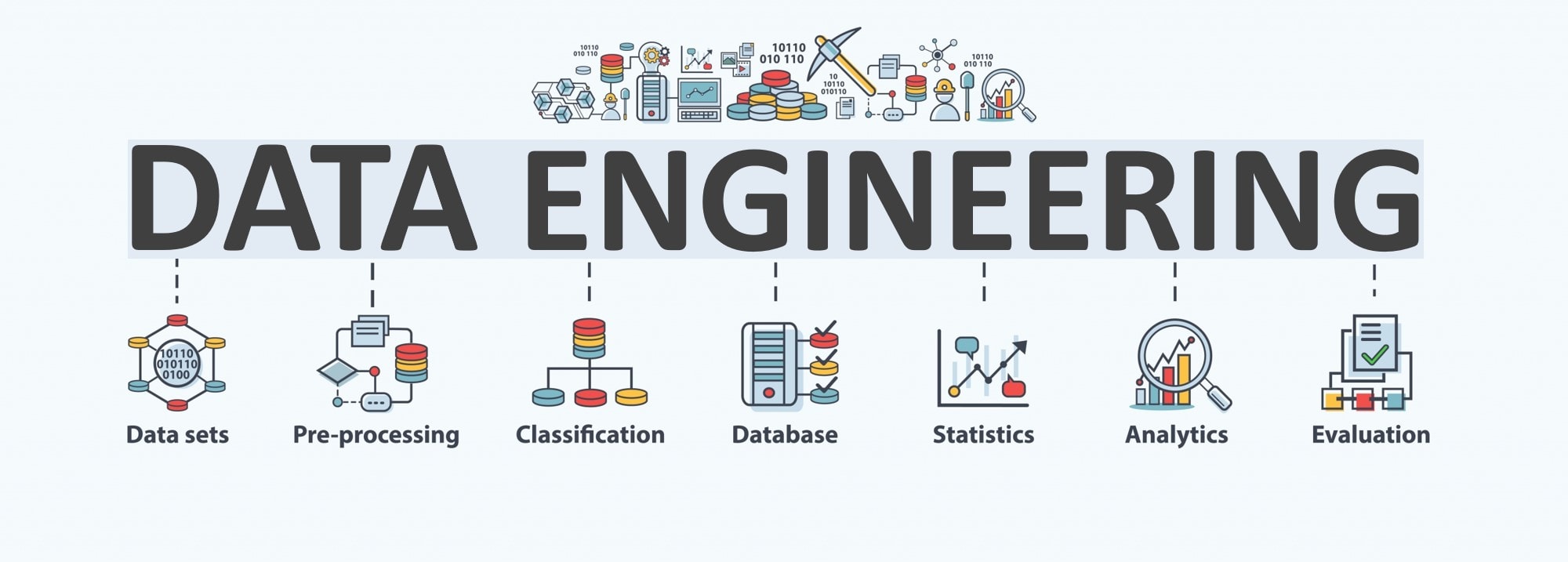
Here's a truth many beginners don't realize: You'll spend 70-80% of your time working with data, not building fancy models. This makes data skills absolutely critical:
Collecting and cleaning messy real-world data
Handling missing values, outliers, and inconsistencies
Feature engineering—creating meaningful inputs for your models
Building data pipelines to automate workflows
Working with SQL and NoSQL databases
The Often-Overlooked Soft Skills
Technical skills get you interviews, but soft skills get you hired and help you advance:
Problem-Solving: Can you think critically about whether ML is even the right solution? How do you frame problems effectively?
Communication: Explaining complex technical concepts to non-technical stakeholders is crucial. If you can't communicate your work's value, it won't get implemented.
Business Acumen: Understanding ROI, strategic value, and business context separates good practitioners from great ones.
Continuous Learning: The field evolves at breakneck speed. What's cutting-edge today might be outdated in two years. Embrace lifelong learning.
Collaboration: ML projects involve cross-functional teams. Being a strong team player is essential.
Your Learning Path: From Zero to Job-Ready

The Complete Beginner Path (6-12 Months)
If you're starting from scratch with little to no programming experience, here's your roadmap:
Months 1-2: Programming Fundamentals
Start with Python. Build a strong foundation in:
Basic syntax and data types
Control flow (loops, conditionals)
Functions and modules
Object-oriented programming
Data structures (lists, dictionaries, sets)
Practice regularly on platforms like HackerRank or LeetCode to solidify your skills.
Months 3-4: Mathematics Refresher
Don't try to master all the math before starting ML—learn it alongside practical applications:
Linear algebra basics (Khan Academy, 3Blue1Brown on YouTube)
Calculus fundamentals (focus on derivatives and gradients)
Probability and statistics essentials
Learn in context as you encounter these concepts in ML
Months 5-7: Machine Learning Fundamentals
This is where the journey gets exciting. Focus on:
Understanding core supervised and unsupervised learning algorithms
Implementing algorithms from scratch to truly understand them
Working with real datasets
Model evaluation and validation techniques
Avoiding common pitfalls like overfitting
Months 8-10: Specialization & Real Projects
Pick a domain that excites you (computer vision, NLP, or another area):
Take specialized courses in your chosen area
Build 3-5 substantial projects for your portfolio
Participate in Kaggle competitions for hands-on experience
Contribute to open-source ML projects
Months 11-12: Job Preparation
Polish your GitHub portfolio with professional documentation
Practice technical interview questions
Study ML system design concepts
Start networking and applying to positions
Prepare your story and practice explaining your projects
Accelerated Path for Career Switchers (3-6 Months)
If you're already a software engineer or have a technical background, you can fast-track:
Months 1-2: Dive deep into ML theory and mathematics. Your programming skills give you a huge advantage—leverage them to implement concepts quickly.
Months 3-4: Master ML frameworks (TensorFlow or PyTorch), work through tutorials, and implement classic papers and algorithms.
Months 5-6: Build production-level projects that showcase both your ML expertise and engineering skills. This combination makes you highly valuable.
The Non-Technical Background Path (12-18 Months)
Coming from a completely non-technical field? It's absolutely possible, but requires more time:
Months 1-4: Build a strong programming foundation (Python, data structures, basic algorithms)
Months 5-6: Mathematics essentials for ML
Months 7-10: ML fundamentals with hands-on projects
Months 11-14: Specialization in a domain area (NLP, computer vision, etc.)
Months 15-18: Portfolio building, interview preparation, and job search
The Traditional Route
Bachelor's Degree in Computer Science, Math, or Engineering: Provides strong fundamentals, networking opportunities, and credibility. Takes 4 years and significant financial investment.
Master's in Machine Learning or Data Science: Increasingly popular, taking 1-2 years and costing $30,000-$100,000+. Can fast-track your career but is expensive.
PhD: Only necessary for research positions or cutting-edge problem-solving. Requires 4-6 years of commitment.
Alternative Paths That Work
Structured Bootcamps: Intensive programs that vary widely in quality, duration, and outcomes. The best programs offer comprehensive curricula, career support, and industry connections.
This is where The AI Academy's AI and Machine Learning Bootcamp stands out as an exceptional option. Their comprehensive 8-month intensive program is specifically designed to take you from beginner to job-ready professional, covering:
Complete Programming Foundation: Python mastery with focus on data science libraries
Mathematics for ML: Linear algebra, calculus, statistics taught in practical context
Core Machine Learning: Supervised, unsupervised, and deep learning algorithms
Specialization Tracks: Deep dives into computer vision, NLP, or other focus areas
Real-World Projects: Build portfolio-worthy projects solving actual business problems
MLOps & Deployment: Learn to deploy models in production environments
Career Support: Resume reviews, interview preparation, and job placement assistance
Mentorship: Direct access to experienced ML practitioners throughout the program
Community: Network with fellow learners and industry professionals
Structured Pacing: The 8-month timeline provides the perfect balance—intensive enough to maintain momentum while allowing time to deeply absorb complex concepts and build substantial projects
The AI Academy's bootcamp transforms what might take 12-18 months of self-study into a structured, guided 8-month journey with expert support at every step.
The Bottom Line on Education
A traditional degree helps but isn't mandatory. Many successful ML engineers are self-taught or bootcamp graduates. What matters most is:
Can you demonstrate strong skills through projects?
Can you pass technical interviews?
Can you deliver value in a real job?
Focus on building demonstrable competence through a strong portfolio. That's ultimately what gets you hired.
Building a Portfolio That Gets You Hired

Your portfolio is your most powerful asset when job hunting. It proves you can take a problem from concept to solution.
Why Projects Trump Certificates
Certificates show you completed coursework. Projects prove you can:
Tackle messy real-world problems
Clean and prepare data effectively
Build, train, and evaluate models
Deploy solutions and communicate results
Employers want to see evidence of practical skills, not just theoretical knowledge.
What Makes a Strong Portfolio
You need 3-5 projects that demonstrate:
Breadth: Variety across different problem types (classification, regression, NLP, computer vision, etc.)
Depth: At least one complex project showing advanced skills—large dataset, sophisticated model, production-ready code
Real-World Relevance: Solutions to actual problems, not just toy academic datasets
Project Ideas by Domain

Computer Vision:
Custom object detection system for specific use cases
Medical image classifier (X-rays, skin lesions)
Real-time emotion detection from video
Document analyzer or receipt scanner
Natural Language Processing:
Sentiment analysis tool for customer reviews
Domain-specific chatbot
Automatic article summarizer or content generator
Fake news or spam detector
Predictive Modeling:
Customer churn prediction system
Sales forecasting with time series analysis
Credit risk assessment model
Demand forecasting for inventory
Recommendation Systems:
Movie, book, or music recommendation engine
E-commerce product recommender
Content personalization system
Best Practices for Every Project
Start with a Clear Problem: Don't just grab datasets randomly. Define what you're solving and why it matters.
Document Thoroughly: Write detailed README files explaining your problem, approach, data, model architecture, results, and how to run the code.
Show Your Process: Include exploratory data analysis, data cleaning steps, and even failed experiments. This demonstrates you understand the full workflow.
Deploy Your Work: Put models into web apps using Streamlit, Gradio, Hugging Face Spaces, or similar platforms. Deployment skills are highly valued.
Write About It: Create blog posts explaining your projects. This showcases communication skills and helps others learn.
Professional Code Quality:
Where to Showcase Your Work

GitHub: Your primary portfolio. Keep repositories well-organized with clear documentation.
Personal Website: A simple portfolio site showcasing your best work (GitHub Pages is free).
Kaggle: Build your profile through competitions and sharing notebooks.
Medium or Blog: Technical articles demonstrating your expertise and communication skills.
LinkedIn: Share projects, write posts about learnings, engage with the community.
The Strategic Job Search

Optimizing Your Application Materials
Resume Essentials:
Keep it to 1-2 pages maximum
Include specific skills: programming languages, frameworks, ML techniques
Quantify impact: "Improved model accuracy by 15%" or "Processed 1M+ data points"
Feature your best projects prominently with links
Tailor your resume for each application using keywords from job descriptions
Include links to GitHub, portfolio site, and LinkedIn
GitHub Profile:
Professional README on your profile
Pinned repositories showcasing your best work
Consistent activity showing ongoing learning
Clear documentation in all repositories
Contribution history to open-source projects
Where to Find Opportunities
Direct Applications:
Company career pages for better visibility
LinkedIn Jobs with filters for ML roles
Indeed and Glassdoor
AngelList for startup opportunities
AI-specific job boards
Networking (Your Most Effective Channel):
Referrals dramatically increase your chances
Attend ML meetups and conferences
Engage in online communities (Reddit, Discord, Twitter)
Informational interviews with people in roles you want
Connect with recruiters specializing in AI/ML
Bootcamp Career Services: Programs like The AI Academy's bootcamp often provide job placement support, connecting graduates with hiring partners and providing referrals to their network.
The Interview Process Demystified
Stage 1: Screening Call (30 minutes) Recruiter assesses your background, communication, and cultural fit. Be prepared to discuss your journey and why you're interested in ML.
Stage 2: Technical Phone Screen (45-60 minutes) Live coding challenge focusing on data structures, algorithms, and problem-solving. Sometimes includes ML-specific questions.
Stage 3: Take-Home Assignment (4-8 hours) Build a small ML model or solve a practical problem. Take your time, write clean code, and document everything thoroughly.
Stage 4: Onsite/Virtual Onsite (3-5 hours) Multiple rounds including:
Coding interviews on algorithms and data structures
ML system design (design an ML solution for a specific problem)
Behavioral questions about past experiences and teamwork
Deep dive into a project from your portfolio
Stage 5: Offer Negotiation Review carefully: salary, equity, benefits, learning opportunities, team culture. Don't be afraid to negotiate respectfully.
Interview Preparation Strategy
Coding Practice: Complete 100-150 LeetCode problems, focusing on medium difficulty. Practice explaining your thinking process aloud.
ML Concepts: Master bias-variance tradeoff, when to use different algorithms, evaluation metrics, overfitting/regularization, feature engineering, and common pitfalls.
System Design: Learn to design ML systems at scale—data pipelines, training infrastructure, deployment, monitoring.
Mock Interviews: Practice with peers or platforms like Pramp to build confidence.
Common Mistakes to Avoid
Applying before having a solid portfolio
Sending generic, untailored applications
Poor communication of technical concepts
Ignoring coding fundamentals while jumping to advanced topics
Not asking thoughtful questions during interviews
Giving up after a few rejections (persistence is key)
Continuous Learning: Staying Relevant in a Rapidly Evolving Field
AI/ML evolves at a breathtaking pace. Continuous learning isn't optional—it's a core part of the job.
How to Keep Your Skills Current
Follow Key Resources:
Papers With Code for state-of-the-art models
Distill.pub for beautifully explained ML concepts
Company blogs: Google AI, OpenAI, DeepMind
arXiv for latest research papers
Towards Data Science for practical applications
Read Research Papers: Start with survey papers and highly-cited works in your area. Don't try to understand every detail—focus on main ideas and contributions.
Take Advanced Courses: After completing foundational training (like The AI Academy's bootcamp), continue with specialized courses in advanced deep learning, reinforcement learning, or specific domains.
Build Side Projects: Replicate recent papers, contribute to open-source ML projects, and create tools that solve your own problems.
Engage with the Community:
Attend conferences (NeurIPS, ICML, CVPR, ACL)
Join online communities and discussions
Share your learnings through blog posts or talks
Listen to ML podcasts during commutes
Specialization vs. Generalization
Early Career (Years 0-2): Stay broad. Explore different areas of ML, work on varied problems, understand the full stack. This makes you more employable and helps you discover your interests.
Mid Career (Years 3-5): Begin specializing. Develop deep expertise in a domain (NLP, computer vision, recommender systems) or technical area (model optimization, ML infrastructure). Specialists often command higher compensation.
Senior Level (Years 5+): Either go deeper into specialization or become a generalist leader overseeing multiple areas.
Always keep learning adjacent skills to remain adaptable as the field evolves.
Your Action Plan: Getting Started Today

This Week
Choose your learning path based on your background (beginner, career switcher, or non-technical)
Set up your development environment: Install Python, Jupyter, and Git
Create accounts on GitHub, Kaggle, and LinkedIn
Start your first tutorial or course—take action immediately
Join 2-3 ML communities online to connect with other learners
This Month
Complete at least one foundational Python or ML course
Start your first small project (even something simple to build confidence)
Follow 20+ ML practitioners on social media for daily learning
Attend a virtual ML meetup or webinar
Set up a learning schedule you can stick to consistently
Research structured programs like The AI Academy's 8-month bootcamp if you want guided, comprehensive training
Next 3 Months
Complete core programming and ML fundamentals
Build 2 portfolio projects from scratch
Participate in a Kaggle competition (doesn't matter where you place)
Start documenting your learning journey publicly
Consider enrolling in The AI Academy's AI and Machine Learning Bootcamp for an intensive, structured learning path with expert mentorship and career support
Next 6 Months
Have 4-5 solid portfolio projects showcasing different skills
Begin practicing coding interview questions regularly
Start applying to junior positions and internships
Network actively—aim for 50+ meaningful connections
Attend at least one in-person ML meetup or conference
Next 8-12 Months
Complete advanced specialization in your chosen area (computer vision, NLP, etc.)
Continue building projects and contributing to open-source
If enrolled in The AI Academy's 8-month bootcamp, you'll be graduating as a job-ready ML professional with a complete portfolio, interview preparation, and career support
Land interviews at target companies
Secure your first role in AI/ML and start your professional journey
Overcoming Common Challenges

Imposter Syndrome
Everyone feels it, especially in a field full of brilliant people. Remember: you don't need to know everything—just enough to add value. The best way to combat imposter syndrome is to focus on what you're learning rather than what you don't know yet.
Feeling Overwhelmed
The field is vast, and there's always more to learn. The solution? Don't try to learn everything at once. Master fundamentals first, then specialize. Trust the process.
Handling Rejection
You'll face rejection—everyone does. Each "no" teaches you something and brings you closer to "yes." Use rejections as learning opportunities to improve your skills and interview performance.
Math Anxiety
Many people struggle with the mathematical concepts. Take it slow, use visual resources (like 3Blue1Brown), and learn in context. The math becomes much clearer when you see how it's applied to real problems.
Staying Motivated
Set small, achievable milestones. Celebrate wins along the way. Connect with a study group or accountability partner. Remember why you started this journey when things get tough.
Final Thoughts: You Can Do This
Starting a career in AI and Machine Learning might seem daunting, but thousands of people have successfully made this transition—from diverse backgrounds, at various ages, through different learning paths.
You don't need:
A PhD from a prestigious university
To be a mathematical genius
A perfect, linear career path
Unlimited time and resources
You do need:
Genuine curiosity about the field
Consistent effort over time
Patience with yourself as you learn
Willingness to build, fail, and iterate
Persistence through challenges and setbacks
The AI/ML field is more accessible than ever, with abundant free resources, supportive communities, and growing demand for talent. Whether you choose the self-study path, a structured bootcamp like The AI Academy's program, or a combination approach, the opportunity is there for those willing to pursue it.
The best time to start was yesterday. The second best time is today.
Take the first step. Install Python. Write your first line of code. Join a community. Enroll in a course. Whatever you do, just start.
Your future in AI and Machine Learning begins now.
Additional Resources
Recommended Courses
Andrew Ng's Machine Learning (Coursera)
Fast.ai's Practical Deep Learning for Coders
The AI Academy's 8-Month AI and Machine Learning Bootcamp (comprehensive, intensive, career-focused program)
Stanford CS229, CS231n, CS224n (online)
Essential Books
"Hands-On Machine Learning with Scikit-Learn, Keras, and TensorFlow" by Aurélien Géron
"Deep Learning" by Goodfellow, Bengio, and Courville
"Pattern Recognition and Machine Learning" by Christopher Bishop
Communities
Reddit: r/MachineLearning, r/LearnMachineLearning, r/DataScience
Kaggle: Competitions and discussion forums
LinkedIn: ML-focused groups and connections
Local meetups: Search Meetup.com for AI/ML groups in your area
Kaggle: Real-world datasets and competitions
LeetCode: Coding interview practice
HackerRank: Programming challenges
Papers With Code: State-of-the-art research with implementations
Ready to accelerate your journey? The AI Academy's AI and Machine Learning Bootcamp offers a proven pathway from beginner to job-ready professional, with expert instruction, hands-on projects, and career support. [Learn more about the program and how it can fast-track your AI career →]
This article was created to help aspiring AI/ML professionals navigate their career journey. Share it with anyone considering a transition into this exciting field!